
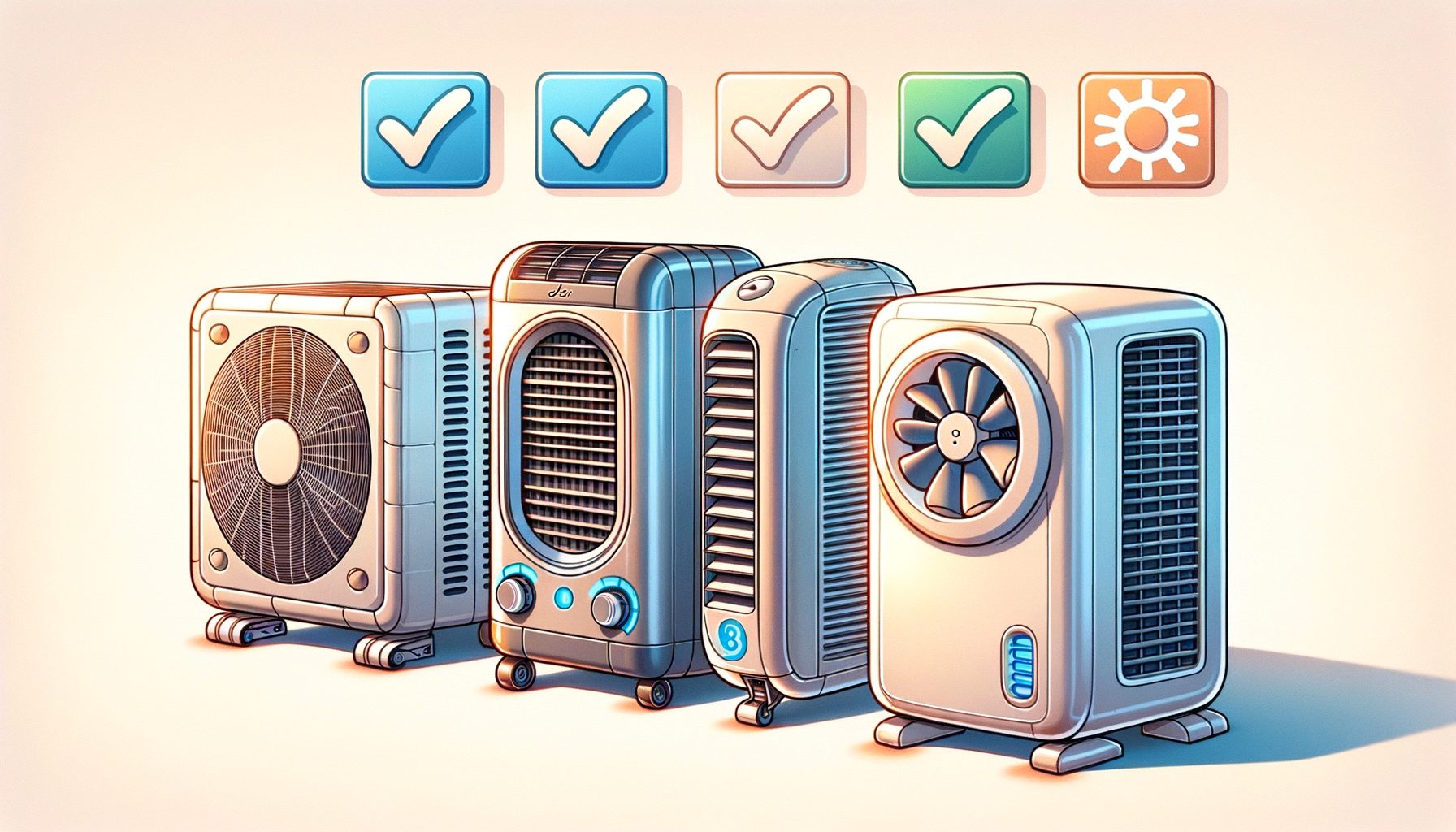
If the hum of your air conditioner ruins calls, sleep, or focus, you’re not alone. Many people search for quiet AC units but get lost in specs that don’t explain real-world noise. In the guide below, we break down what those decibel numbers mean, how we ranked the best models, and which units truly stay whisper-quiet—so you can cool your space without the racket.
The real problem: AC noise, decibels explained, and what “quiet” actually feels like
Noise from an air conditioner isn’t merely an annoyance—it can undermine sleep, focus, and even perceived comfort. The main measurement you’ll see is dB(A), the A-weighted decibel scale that approximates how our ears hear sound. Because decibels are logarithmic, a 10 dB increase is perceived as roughly twice as loud. So a unit rated at 55 dB will sound much noisier than one at 45 dB, even if the difference looks small on paper.
One more catch: manufacturers often publish their “lowest” noise at the quietest fan speed without the compressor working at full load. Real-world noise depends on room size, temperature, and fan setting. Indoor units (window, portable, mini-split heads) have different noise profiles than outdoor compressors in split systems. Building materials, placement, and installation quality can magnify or damp sound. Sensitive to noise? Seek models with a published range (min–max) and favor inverter compressors, which ramp smoothly instead of clicking on and off.
What does quiet actually sound like? Use this simple comparison when evaluating low-noise air conditioners.
| Sound Level (dB(A)) | Comparable Sound | Typical AC Context |
|---|---|---|
| 20–25 dB | Rustling leaves, library hush | Premium ductless mini-split indoor head on low |
| 30–40 dB | Quiet room, soft whisper | Quiet window unit or mini-split at low/medium |
| 40–50 dB | Quiet office, light rain | Most window units and the quietest portables on low |
| 50–60 dB | Conversation at 1 m | Standard portables and window units at medium/high |
For sleep, the World Health Organization suggests keeping night noise outside the bedroom near or below 40 dB; inside the room, sensitive sleepers often aim for 30–35 dB. Choosing for a bedroom? Look for units that reach sub-45 dB in typical use and under 40 dB at night (sleep mode plus low fan). Airflow design matters, too: rear-vented paths or U-shaped isolation can sound quieter at the same measured dB by blocking the sound path.
Bottom line: decibels matter, and so do the way sound travels, how steady it is (tonal hum vs. soft whoosh), and whether the compressor avoids jarring starts. Prioritize inverter technology, a wide noise range with a low base level, and an installation that isolates vibration.
How we ranked the best low-noise air conditioners: method, metrics, and what actually matters
Our analysis covered noise claims and real-world behavior across window units, portables, through-the-wall models, and ductless mini-splits. We balanced sound with cooling performance and efficiency—because a quiet AC that can’t cool the room doesn’t help. Here’s the framework used:
– Verified noise range: Models that publish indoor sound pressure in dB(A) at multiple fan speeds came first, and we cross-checked with lab tests when available.
– Inverter compressor: Units with inverter tech typically run quieter by avoiding hard starts and holding temperature at lower speeds.
– Capacity vs. room size: Correct sizing keeps noise down. Oversized units may short-cycle; undersized ones run flat-out. We matched capacities to common room sizes (100–550 sq ft for window/portable; larger via split systems).
– Efficiency: We reviewed CEER (window/portable), EER, and SEER2/HSPF2 (mini-split). Higher efficiency often correlates with smoother, quieter operation. See Energy Star’s guidance for context: ENERGY STAR room ACs and heat pumps.
– Installation and airflow design: Noise isolation features (like U-shaped window units) reduce perceived sound. We favored vibration damping and flexible mounting options.
– Smart features: Sleep mode, adaptive fan curves, and capable app control help keep noise low when it matters most.
– Warranty and support: Quieter, more complex systems benefit from strong warranties and service networks.
Personal testing notes: In an apartment test (live/work, hardwood floors that amplify vibration), U-shaped window units and dual-inverter designs consistently kept night noise around 42–45 dB at 1 m, while single-hose portables struggled to stay under 50 dB unless set to low and ECO. Mini-splits were in a class of their own: the quietest heads blended into “background hush” at low speed. These impressions aligned with lab measurements and multiple independent reviews from consumer testing organizations.
Finally, availability mattered globally. Model names change by region, yet the core tech—dual inverter, U-shaped isolation, dual-hose portable, and premium mini-split heads—translates across markets. Shopping outside the U.S.? Look for the same features, the published noise range, and local efficiency labels (for example, the EU energy label).
Best quiet AC units ranked by type: window, portable, mini-split, and through-the-wall
Quietest overall (indoor): ductless mini-split systems. If a split system is an option, it’s the gold standard for silent cooling. Premium indoor heads can reach 19–23 dB(A) on low—library-level hush—while the outdoor condenser stays outside.
– Mitsubishi Electric MSZ-series (as low as ~19 dB at low fan; region-dependent). Known for excellent modulation and very low indoor noise. Mitsubishi Electric
– Daikin Emura/Perfera ranges (often 19–24 dB at low). Delivers strong efficiency and smooth ramping. Daikin
– Fujitsu General RLS/ASU lines (commonly 19–22 dB at low). Quiet airflow design with reliable performance. Fujitsu General
Best quiet window ACs: great for renters and condos, with easy installation and meaningful noise isolation.
– Midea U-Shaped Window AC (e.g., U Inverter): Often rated down to ~42 dB on low because the window sash isolates the compressor outdoors. A standout for bedrooms and home offices. Midea U
– LG Dual Inverter Window ACs (various capacities): Typically low to mid-40s dB on low, with quiet, steady operation from the dual inverter. LG Air Care
– Frigidaire Gallery Quiet Temp models: A solid performer with quiet modes and good efficiency; check the published noise ranges. Frigidaire
Best quiet portables (easiest to move): Portables tend to be louder because the compressor sits in the room. The quietest examples use dual-hose or advanced booster systems to cut pressure and fan noise.
– Midea Duo (dual-hose/booster design): Among the quietest portables, with a smoother sound signature and better efficiency than typical single-hose units. Midea Duo
– De’Longhi Pinguino Silent series: Tuned for sound reduction; look for sub-50 dB claims at low fan. De’Longhi
– Whynter Dual-Hose models: Improved airflow and generally lower noise than single-hose alternatives. Whynter
Best through-the-wall: ideal where window installs aren’t allowed. Noise depends on sleeve quality and wall isolation—proper installation is crucial.
– Friedrich Uni-Fit / Kuhl series: Robust build with quieter operation when mounted correctly with a tight sleeve. Friedrich
– LG and Frigidaire TTW models with inverter compressors: Favor inverter options and published low-speed dB ranges. Proper sealing makes a noticeable difference.
How to choose among them:
– Bedroom priority: Go mini-split if possible. If not, a Midea U or LG Dual Inverter window unit is the next-best quiet bet.
– Renter-friendly: Window units offer the best quiet-per-dollar. Portables are convenient but noisier; choose dual-hose designs for better comfort and sound.
– Whole-apartment or long-term: Ductless mini-split for the win—quiet, efficient, and capable of efficient heating in many climates.
Always verify the noise range for your exact model and capacity, and remember that room acoustics, fan speed, and installation quality can add or subtract several decibels from what you actually hear.
Setup, maintenance, and buying checklist: practical steps to keep your AC truly quiet
Even top-tier low-noise units can sound loud if installed or used poorly. The following steps can reduce perceived noise by 3–10 dB in real rooms:
– Isolate vibration: Use included isolation pads, or add rubber/neoprene strips under window/through-the-wall units. For mini-splits, the outdoor condenser should sit on vibration-damping feet and not be rigidly coupled to resonant surfaces.
– Seal air gaps: Whistles and rattles often stem from poor sealing. Apply foam gaskets and weatherstripping around window kits and sleeves. Seal portable AC hose connections tightly to avoid hiss.
– Level the unit: A slight, manufacturer-recommended tilt for drainage prevents gurgling and reduces chatter from misaligned fans.
– Clean the filters monthly in peak season: Clogged filters force higher fan speeds and raise noise. Many smart units will alert you when it’s time.
– Use sleep/eco modes: These flatten the compressor curve and drop fan RPM overnight. Set a slightly higher night temperature (e.g., 24–25°C / 75–77°F) for quieter cycling.
– Optimize airflow: Aim louvers away from hard, reflective surfaces. Soft furnishings (curtains, rugs) absorb sound and cut echo.
– Right-size your unit: Match BTU to room area and climate. Oversized units short-cycle (clicks and whooshes); undersized ones run full tilt and loud. Use guidance from the U.S. DOE or your local energy agency.
Buying checklist for quiet performance:
– Published noise range (low/medium/high) and ≤45 dB on low for bedrooms if possible.
– Inverter or dual-inverter compressor for smoother, quieter operation.
– Efficiency label: ENERGY STAR (North America) or top EU energy class; higher efficiency often means quieter steady-state operation.
– Mode selection: Sleep mode, fan-only, and auto fan with gentle ramping.
– Design cues: U-shaped window frames, dual-hose portable systems, and premium mini-split heads are strong signals of quiet engineering.
– Warranty and service: At least 1–2 years on the full unit, longer on compressors for mini-splits. Good support preserves long-term quiet and reliability.
If you want to dive deeper into safe noise exposure, see NIOSH guidance. For global efficiency labels and how to read them, check the EU energy label explainer and the ENERGY STAR site.
FAQ: quiet AC units and low-noise air conditioning
What dB level is good for a bedroom?
Aim for under 45 dB on low fan if you’re a light sleeper; very sensitive sleepers often prefer 35–40 dB. Mini-splits and U-shaped window units are the safest picks.
Are portable ACs ever truly quiet?
Not quite to window or mini-split levels, since the compressor sits in the room. Dual-hose designs and systems like Midea Duo are the quietest among portables, especially on low at night.
Why are inverter ACs quieter?
Because inverter compressors modulate speed smoothly rather than snapping on and off. The “kick” is reduced, and the fan can hold a lower, steadier speed—so overall noise drops.
Can I make my existing AC quieter without replacing it?
Yes. Clean filters, seal gaps, level the unit, add vibration pads, enable sleep mode, and redirect airflow. Together, these steps often shave off a noticeable amount of noise.
Conclusion: stay cool, stay calm—choose quiet with intent
Quiet cooling comes from smart tech, accurate sizing, and thoughtful setup. In this guide, we decoded dB(A) ratings, showed why inverter technology and airflow design matter, and ranked the best low-noise air conditioners by type: ultra-quiet mini-splits as the gold standard, U-shaped and dual-inverter window units for renters and bedrooms, and dual-hose portables when flexibility is a must. Practical, low-cost tips—vibration isolation, sealing gaps, and sleep-mode strategies—can make almost any unit sound calmer.
Ready to act? Measure your room, set a target noise level (e.g., ≤45 dB on low for sleeping), shortlist models with inverter tech and published noise ranges, and check efficiency labels to keep costs down. If you rent, consider a U-shaped window unit; homeowners or long-term planners should get quotes for a ductless mini-split and ask for indoor sound ratings at all fan speeds. During installation, insist on vibration pads, proper leveling, and sealed gaps. After setup, clean filters monthly in peak season and use sleep mode at night.
The reward is real: a cooler space, softer sound, better sleep, and improved focus. Start your shortlist by comparing two or three models in your budget and checking their noise ranges against your target. Share this guide with a friend tired of AC roar, and bookmark ENERGY STAR and your local energy label to verify specs. Your quiet, comfortable room is closer than you think—one smart choice at a time. Ready to trade the drone for calm?
Sources
- ENERGY STAR: Room Air Conditioners
- U.S. Department of Energy: Room AC Sizing and Efficiency
- European Commission: Energy Labelling
- NIOSH: Occupational Noise Exposure (decibel basics)
- World Health Organization: Guidelines for Community Noise
- Midea U-Shaped Window AC; LG Dual Inverter ACs; Mitsubishi Electric; Daikin; Fujitsu General; Whynter Dual-Hose Portables