
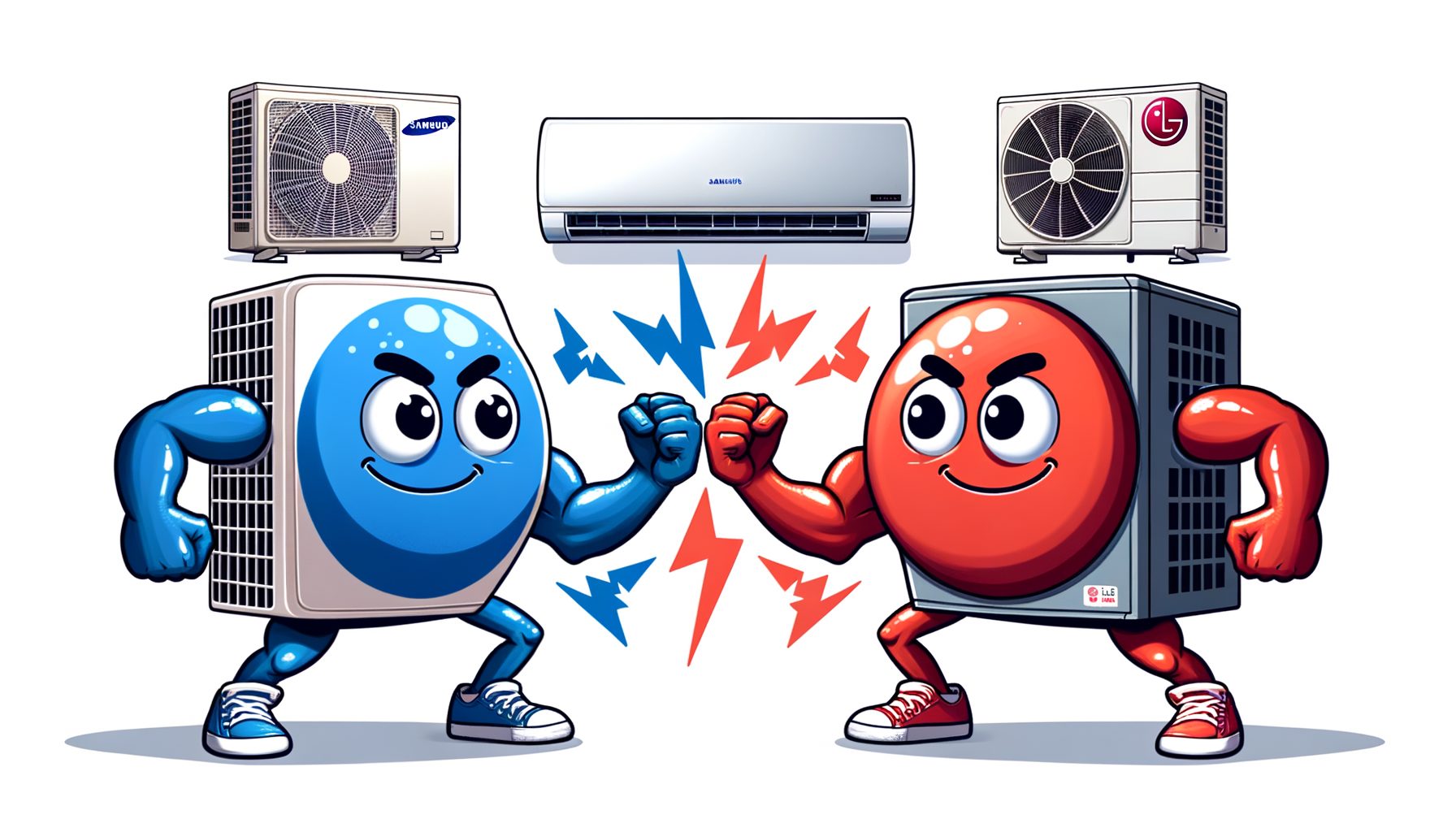
Every summer, the same dilemma comes back: the room runs hot, bills climb, and your AC either shoots icy air at your face or hums like a small turbine. Choosing between two top-tier contenders—Samsung WindFree and LG DualCool—raises the real questions: which one feels better, costs less to operate, and holds up over time? Here’s a plain-language breakdown to help you choose with confidence.
The Real-World Problem: Comfort vs Cost—And Why This Choice Matters
The core challenge when choosing an air conditioner is balancing three things that rarely align: consistent comfort, quiet operation, and low running costs. Plenty of units cool a room quickly, yet many do it by blasting a cold draft that feels uncomfortable after a few minutes. Others run quietly but use more power than you’d like, especially in peak summer. Maintenance and air quality add more complexity—dust, humidity, and odors can turn a poorly maintained AC into a problem for your health and your wallet.
Enter the Samsung WindFree vs LG DualCool decision—now the differences get practical. Samsung positions WindFree as a comfort-first system that cools without direct cold drafts by dispersing air through thousands of micro-holes. LG’s DualCool, powered by its Dual Inverter Compressor, focuses on ultra-stable temperature control and higher efficiency at variable speeds, cutting energy consumption without sacrificing power. The smart ecosystems are strong on both sides (SmartThings for Samsung, ThinQ for LG), and each claims substantial savings versus non-inverter models; day-to-day experience, however, hinges on room size, climate, installation quality, and how you actually use the unit.
Understanding the problem means understanding your home: Do you mostly work from home and need quiet, even cooling all day? Do you live in a humid climate where dehumidification is just as important as cooling? Is your electricity cost high enough that a few extra kWh per day hurts? If the answer to any of these is yes, the differences in airflow, control, and energy use between these two lines matter. Well, here it is: how they perform in the room you live in, not just on a spec sheet.
Cooling Experience Showdown: WindFree vs Dual Inverter in Everyday Use
Comfort is not just about temperature; it’s about how that temperature reaches you. Samsung’s WindFree technology disperses conditioned air through micro-perforations so you avoid the “cold draft” effect. In practical terms, the effect feels like the room temperature settling evenly rather than being hit by a stream of cold air. Especially helpful if your bed or desk sits near the indoor unit. Many users find they can run WindFree mode for hours without needing to reposition or adjust louvers—great for sleep and focused work. On select models, Samsung adds AI Auto Comfort, which learns your usage patterns and pre-adjusts modes and temperature over time.
LG DualCool takes a different route. The Dual Inverter Compressor maintains stable temperatures by ramping up and down efficiently, rather than turning fully on and off. That stability reduces temperature swings, and when paired with multi-directional airflow, it feels consistent across the room. LG’s louvers and fan controls let you choose direct airflow for rapid cool-down (handy after coming home to a hot space) and more diffused airflow once the room is at the target temperature. Some models feature a Comfort Air or Auto Swing function to steer air away from occupants and reduce drafts during longer sessions.
Noise matters. Inverter systems from both brands can run extremely quietly at low fan speeds—often around library-level sound. Many Samsung WindFree and LG DualCool indoor units list minimum noise levels in the high teens to low 20s dB(A), depending on model and size; quiet enough that the background noise of your home may be louder. When you need a quick cooldown, both will temporarily increase fan speed, which is audible but still controlled compared to non-inverter models.
Humidity control counts, too. WindFree’s gentle dispersion helps maintain a steady dew point without feeling clammy because it avoids sudden cold blasts. LG’s Dual Inverter often shines in humid climates by holding compressor speed in a sweet spot that removes moisture efficiently while keeping temperature stable. If you live in the tropics or coastal regions, look for models with dedicated Dry/Dehumidify modes on both brands for best results.
In short: If you’re sensitive to direct airflow or want “cool without the breeze,” Samsung’s WindFree mode stands out. If rapid cool-down plus precise temperature stability and flexible airflow options top your list, LG’s DualCool delivers. Both are comfortable; they simply achieve it with different philosophies that matter in real rooms.
Efficiency, Smart Control, and Air Quality: The Features That Save You Money
Energy efficiency is where both product lines offer real financial value. Inverter systems can cut power consumption significantly compared to conventional ACs by avoiding constant full-power cycling. LG’s Dual Inverter marketing often cites improved efficiency and faster cooling versus non-inverter units. Samsung highlights energy-saving WindFree operation that reduces fan power when the set temperature is reached, maintaining comfort with minimal energy draw. Actual savings will vary by model and region, but both are a major step up from older, fixed-speed ACs.
To decode efficiency across countries, check local metrics such as SEER, EER, or CSPF. Higher numbers generally indicate better seasonal performance. Beyond ratings, both brands offer power-saving modes, sleep schedules, and energy monitoring via apps—features that translate into lower bills if you use them. Standby power matters as well; using schedules and geofencing (available in SmartThings or LG ThinQ) can prevent unnecessary operation when you’re away.
Smart control has become standard at this tier. Samsung SmartThings integrates AC control with routines (for example, turning on WindFree 20 minutes before you arrive home), voice assistants, and energy dashboards. LG ThinQ offers similar features, including remote start/stop, mode changes, and filter reminders. If your home already uses one ecosystem, sticking with it can make automation smoother.
Air quality and maintenance are often overlooked but crucial. Many WindFree and DualCool models include multi-stage filtration, auto-clean functions to reduce moisture and mold on the heat exchanger, and anti-corrosion coatings (Samsung’s DuraFin, LG’s Gold Fin) that help longevity in salty or humid environments. Clean filters and a dry coil enhance airflow, reduce odors, and maintain efficiency—small habits, big impact.
| Category | Samsung WindFree (typical) | LG DualCool (typical) | What It Means |
|---|---|---|---|
| Cooling Method | Diffused airflow via micro-holes (WindFree mode) | Direct or diffused airflow via adjustable louvers | Comfort preference: gentle vs adjustable stream |
| Compressor | Inverter | Dual Inverter (twin rotary) | Stable temps and better efficiency than non-inverter |
| Noise (indoor, low fan) | ~19–24 dB(A) depending on model | ~19–24 dB(A) depending on model | Both can be library-quiet |
| Smart Control | SmartThings, voice assistants | LG ThinQ, voice assistants | Remote control, schedules, energy tracking |
| Air Quality | Multi-layer filters, auto clean, anti-corrosion (DuraFin) | Filters, auto clean, anti-corrosion (Gold Fin) | Cleaner air, better coil health |
| Energy Metrics | High SEER/CSPF models available | High SEER/CSPF models available | Check regional ratings and size |
Real savings example: If a non-inverter 1.5 HP (≈12,000 BTU) AC costs you, say, 1.2 kWh per hour on average use, moving to an efficient inverter model might drop that to roughly 0.7–0.9 kWh per hour in steady-state conditions, depending on climate and setpoint. Over 8 hours a day for 100 days, that’s hundreds of kWh saved—which adds up fast at typical electricity rates.
Sources worth checking before buying include official product pages, local energy labels, and independent reviews. Start here:
– Samsung WindFree overview: https://www.samsung.com
– LG Air Solution and ThinQ: https://www.lg.com
– ENERGY STAR (ratings and tips): https://www.energystar.gov/products/room_air_conditioners
– IEA on cooling demand: https://www.iea.org/reports/the-future-of-cooling
Buyer’s Guide: How to Pick Between Samsung and LG for Your Space
Choosing the “best” unit means matching features to your room and routine. Use this step-by-step checklist to decide:
1) Room size and insulation: Measure your space (length × width × height). Look for capacity in BTU/h or kW that aligns with your climate and insulation level. Undersizing leads to constant strain; oversizing causes short cycling and humidity issues. Both Samsung and LG offer multiple capacities—choose the right size before the brand.
2) Draft sensitivity: Sensitive to direct cold air or sleeping close to the indoor unit? Samsung’s WindFree mode offers a clear comfort advantage. Prefer a fast chill with the option to redirect airflow later? LG’s adjustable louvers and Dual Inverter stability will suit you.
3) Climate and humidity: In humid climates, prioritize models with effective dehumidify modes and strong part-load performance. LG’s Dual Inverter control can be particularly efficient at steady moisture removal. Samsung’s even dispersion can feel less clammy at lower fan speeds once the room stabilizes.
4) Noise priorities: If you work from home or have a baby sleeping nearby, look at minimum indoor noise levels and user reviews. Both brands can be whisper-quiet; installation quality (wall rigidity, line set routing) also affects perceived noise.
5) Smart home fit: Already using Samsung SmartThings? A WindFree unit will snap into your routines easily. Invested in LG ThinQ appliances? Keeping everything in one app simplifies automation, energy reports, and maintenance reminders. Both integrate with major voice assistants.
6) Air quality and maintenance: Consider models with multi-stage filtration, auto cleaning, and easy-access filters. In coastal or polluted areas, anti-corrosion fins (DuraFin or Gold Fin) aren’t just marketing talk—they protect performance over time. Plan to rinse filters every 1–2 months during heavy use.
7) Running cost and tariffs: Compare energy labels (SEER/EER/CSPF) for the exact model. Use your electricity rate to estimate monthly costs. If your utility offers time-of-use pricing, set app schedules to pre-cool during cheaper hours.
8) Warranty and service: Check local warranty terms. Compressor warranties can extend years, but labor coverage and parts vary. Factor in the strength of local installers and service centers. A well-installed, properly charged inverter AC can run quieter and cheaper than the same unit installed poorly.
9) Aesthetics and space: WindFree panels often look clean and minimalist due to the micro-hole fascia; LG’s indoor units have sleek curves and visible louvers. If the unit sits in a living area, aesthetics might matter more than you think.
Decision shortcut:
– Pick Samsung if: you want the gentlest, “no-draft” cooling experience, already use SmartThings, and value quiet comfort most.
– Pick LG if: you want rapid cool-down plus precise temperature stability, already use ThinQ, and prioritize efficiency at variable loads.
Conclusion: Your Best Cool Starts With a Smart, Personal Match
Here’s the bottom line: both Samsung WindFree and LG DualCool are premium, efficient, and smart-ready air conditioners designed to solve the same pain points—hot rooms, high bills, and noisy nights. They simply prioritize comfort in different ways. Samsung leans into ultra-gentle, draft-free cooling that disappears into the background once your room hits the setpoint. LG doubles down on fast chill and razor-stable temperatures with a Dual Inverter approach that’s consistently efficient day after day. Either can be whisper-quiet, clean the air effectively, and integrate with your phone and voice assistant.
If you’re sensitive to airflow or want the “I can’t feel it, but it’s cool” sensation, WindFree is a standout. If you prefer quick, controllable airflow and energy stability across long usage, DualCool is hard to beat. The smartest move now is to match model capacity to your room, use the mobile app to automate schedules, clean your filters regularly, and take advantage of energy-saving modes. Those steps will make a bigger difference than obsessing over tiny spec differences.
Take action today:
– Measure your room and shortlist two capacities from each brand.
– Compare local energy labels and warranties for those exact models.
– Ask an authorized installer to assess placement, drainage, and line length.
– Set up app routines on day one—pre-cool before you arrive and enable sleep mode at night.
Take those steps, and your AC won’t just cool—it will quietly reduce your stress, your bills, and your carbon footprint. Great comfort isn’t an accident; it’s a series of smart choices that start before you press “On.” Which style of comfort matches you best—the silky, draft-free calm of WindFree or the precision power of Dual Inverter? Choose now, and enjoy the difference every day.
Quick Q&A
Q: Which is more energy efficient, Samsung WindFree or LG DualCool?
A: Both are inverter-based and can be highly efficient. Actual efficiency depends on the specific model’s SEER/CSPF ratings, your climate, and usage. Compare labels for the models you can buy locally.
Q: Is WindFree really “no wind”?
A: WindFree mode diffuses air through micro-holes to avoid direct drafts. You’ll still feel the room getting cooler, but without a strong stream of cold air.
Q: Which cools a room faster?
A: Generally, LG DualCool with direct airflow and strong inverter ramp-up may feel faster during initial cool-down. Samsung can also cool quickly in standard mode; WindFree is ideal for maintaining comfort after reaching setpoint.
Q: Do both work with voice assistants?
A: Yes. Samsung uses SmartThings; LG uses ThinQ. Both support major voice platforms in most regions.
Sources:
– Samsung Air Conditioners and WindFree technology overview: https://www.samsung.com
– LG Air Solution and Dual Inverter/DualCool overview: https://www.lg.com
– ENERGY STAR: Room AC buying and efficiency tips: https://www.energystar.gov/products/room_air_conditioners
– International Energy Agency: Cooling demand and efficiency insights: https://www.iea.org/reports/the-future-of-cooling