
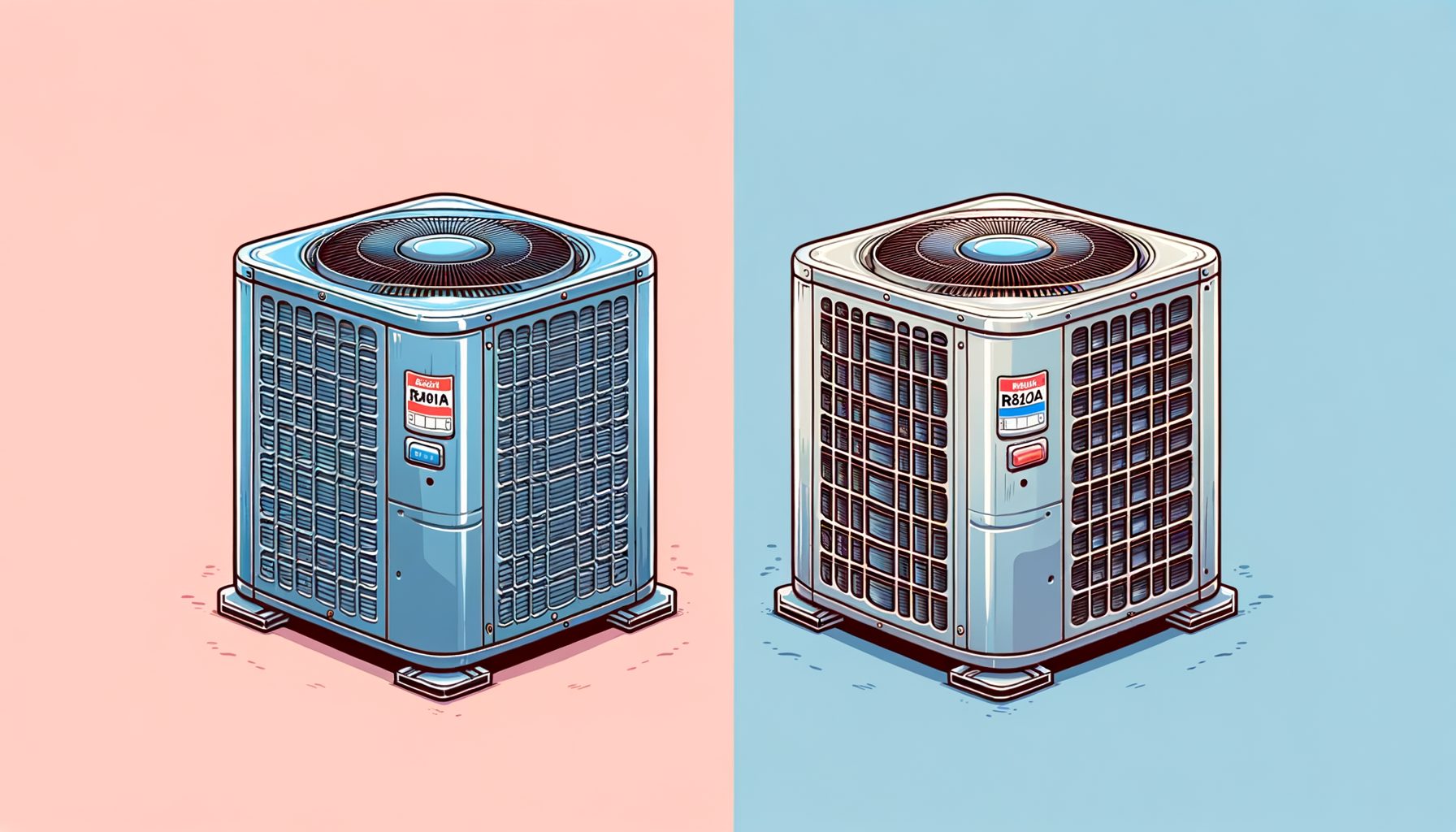
Struggling to choose between R32 and R410A for your next air conditioner? You’re not alone. For many homeowners and renters, the R32 vs R410A debate is the biggest refrigerant decision today. It touches your energy bills, climate footprint, and how “future‑proof” your AC will be under new regulations. In this guide, you’ll get the differences in clear, practical terms so you can pick the best option for your space, budget, and local rules—without getting lost in jargon.
Why this choice matters: environment, regulations, and future‑proofing
You keep hearing about R32 vs R410A for good reason. Around the world, countries are phasing down high‑global‑warming refrigerants to meet climate targets under the Kigali Amendment to the Montreal Protocol. R410A—once the “go‑to” refrigerant for split ACs and heat pumps—is an HFC blend with a high global warming potential (GWP). While it does not harm the ozone layer, it traps far more heat in the atmosphere than CO₂ on a per‑kg basis. By contrast, R32 carries a much lower GWP and similar or better performance, which is why many brands have shifted their residential units to R32 in Asia, Europe, and increasingly North America.
Your refrigerant choice also affects availability, service costs, and compliance. As HFC phase‑downs intensify, higher‑GWP gases like R410A are expected to become more expensive and harder to source in some regions. New codes and standards are enabling wider use of “A2L” mildly flammable refrigerants like R32 in homes, provided installers follow safety rules for charge size, ventilation, leak detection, and electrical protection. To keep an AC easy to service five to ten years from now, it pays to understand these shifts.
Well, here it is—a quick reference table that summarizes the most important differences.
| Factor | R32 | R410A | Notes / Source |
|---|---|---|---|
| Type | Single-component HFC | HFC blend (R32/R125) | Blend complexity affects service practices |
| ODP (Ozone Depletion Potential) | 0 | 0 | Both are non‑ozone‑depleting |
| GWP (100‑year) | ~675 | ~2088 | Commonly cited IPCC AR4 values; see EPA/IPCC |
| ASHRAE safety class | A2L (mildly flammable) | A1 (no flame propagation) | Safety class drives code requirements |
| Operating pressure | Similar to, slightly higher than R410A | High | Requires compatible components and tools |
| Charge amount for same capacity | ~20–30% lower | Higher | Less refrigerant reduces CO₂e footprint |
| Typical efficiency vs comparable R410A unit | ≈5–10% higher | Baseline | Varies by model; see manufacturer data |
| Regulatory outlook | Favored in many new room ACs | Being phased down in many markets | Kigali/AIM Act/EU F‑gas frameworks |
What does all of that mean for you? If you’re buying a new air conditioner and want lower climate impact, strong efficiency, and better alignment with future regulations, R32 is a compelling default in many regions. Owners of working R410A systems need not panic or discard them. Keep the unit well‑maintained, address leaks quickly, and plan your next upgrade window with local policy and service availability in mind.
For context, explore: UNEP: Kigali Amendment, U.S. EPA AIM Act (HFC phase‑down), European Commission: F‑gases.
Efficiency and real‑world performance: what changes at home
When people ask “Which cools better, R32 or R410A?” they usually mean: Will my room get comfortable faster, and will my bill be lower? In lab and field data, R32 consistently shows higher volumetric capacity and better heat transfer than R410A, giving manufacturers an edge to design more efficient compressors and heat exchangers. In many comparable models, that translates to roughly 5–10% improved seasonal efficiency (SEER/SCOP) for R32. Real‑world savings depend on climate, thermostat habits, insulation, and unit size, yet the refrigerant advantage is real and widely documented in new designs.
One practical benefit: for the same cooling capacity, an R32 system typically uses 20–30% less refrigerant charge than an R410A unit. Then this: a smaller charge reduces both the system’s greenhouse gas “at risk” if a leak occurs and service costs when topping up. It also helps manufacturers build more compact outdoor units without sacrificing performance. In hot climates, many R32 systems maintain capacity efficiently at high outdoor temperatures, which can reduce the need for oversizing. What’s interesting too: brands in markets like India, Japan, and the Middle East have leaned into R32 precisely because of that high‑ambient performance profile.
There are some engineering trade‑offs. R32 can exhibit a higher discharge temperature than R410A under certain conditions, so control strategies and component choices (e.g., optimized compressors, refrigerant injection, or improved coil designs) are used to keep reliability high. For end users, those design choices remain invisible; what you notice is that a modern R32 inverter split often delivers quieter operation, steadier room temperatures, and lower kWh usage compared to older fixed‑speed R410A units. If you are upgrading from a 7–10‑year‑old AC, the combined gains from inverter tech, better coils, and R32 can be dramatic—sometimes cutting cooling energy by 20–40% in total, depending on your baseline.
Consider a quick example: suppose a 2.5‑ton (≈8.8 kW) R410A split uses 1,500–1,800 kWh each summer in a warm climate. A comparable R32 inverter with higher SEER might save 150–300 kWh over the season, worth real money as electricity prices rise. If your utility offers time‑of‑use pricing, the improved part‑load efficiency of inverter R32 units can further trim peak charges. In cold‑climate heat pump applications, the refrigerant choice is one factor among many (compressor design, defrost strategy, outdoor coil sizing), but R32 remains a strong platform used in many cold‑weather heat pumps now rolling out with A2L approvals.
Takeaway: if you are buying new and you see two similar models—one R410A and one R32—the R32 model will often post better efficiency and lower lifetime climate impact, without sacrificing comfort. Always compare the energy label and independent test data for confirmation.
Safety, installation, and cost: how to decide for your home
Safety and cost turn engineering into practical decisions. R410A is ASHRAE A1 (no flame propagation), while R32 is A2L (lower toxicity, mildly flammable). That does not make R32 “dangerous” in typical residential use, but it does mean your installer must follow specific standards: proper brazing, ventilation during service, adherence to maximum charge limits for the room size, correct electrical protection, and use of A2L‑rated tools and recovery equipment. Globally, updated safety standards (e.g., UL 60335‑2‑40 4th Ed., EN 378, AS/NZS 5149) and training have enabled wide adoption of R32 in homes and apartments. Many millions of R32 units are already in service worldwide.
For homeowners and renters, the action items are straightforward. Choose licensed installers trained for A2L refrigerants. Confirm the indoor unit location and room volume are appropriate for the intended charge size; your contractor will run the calculation. Keep ignition sources away from the work area during installation or service. Schedule annual maintenance to check for leaks, clean filters and coils, and verify safe operation. These steps are best practice for any AC, and they’re essential to get the full benefit of R32’s lower GWP and efficiency.
On cost, you will usually find that R32 systems are priced similarly to comparable R410A models, and sometimes lower. The refrigerant itself can be less costly per kg, and because R32 units often need a smaller charge, the fill cost is reduced. Over the life of the unit, the biggest savings come from energy efficiency, not refrigerant price. As HFC phase‑downs tighten, however, R410A can face supply constraints and price volatility in certain markets, making R32 (or other new A2L options like R454B) a safer bet for long‑term servicing.
What if you already own an R410A system? Do not retrofit it to R32. R32 is not a drop‑in replacement. The system design, safety classification, expansion device, compressor, and controls are all matched to the refrigerant. In many jurisdictions, converting an R410A unit to an A2L refrigerant would violate code and manufacturer instructions. The smart path is to maintain your R410A unit well—fix leaks promptly, recover and recycle refrigerant responsibly—and plan to replace it at end of life with a compliant low‑GWP model. If your R410A unit is relatively new and performs well, keep it; just be aware of future service costs. If it is older, inefficient, or leaking, an upgrade to an R32 inverter or another low‑GWP A2L can pay back quickly via energy savings and avoided repairs.
Quick decision guide:
- If buying new: favor an R32 model with strong efficiency ratings and a reputable brand. Verify local code compliance for A2L refrigerants.
- If keeping an R410A system: maintain it diligently, budget for potential HFC price changes, and plan your next upgrade window.
- If you need service: use technicians trained for your refrigerant type; insist on proper leak testing and recovery.
Helpful safety and standards resources: ASHRAE Standards, AHRI: A2L Refrigerants.
Q&A: quick answers to common questions
Q: Can I recharge my R410A AC with R32? A: No. R32 is not a drop‑in replacement for R410A. The system’s safety classification, components, and controls are not compatible. Use only the refrigerant specified on the nameplate.
Q: Is R32 safe in apartments? A: Yes, when installed per code by trained professionals. A2L refrigerants have strict charge and ventilation rules that installers must follow. Millions of apartment units use R32 globally.
Q: Will R410A be banned? A: Policies vary by country. Many markets are phasing down high‑GWP HFCs, which reduces availability over time rather than instantly “banning” existing equipment. Check your local regulations and timelines.
Q: Which cools better in very hot weather? A: Modern R32 designs often maintain capacity efficiently at high ambient temperatures and can be as good or better than R410A models, depending on the exact unit. Always compare tested performance data.
Conclusion: choosing confidently and acting now
Bottom line: R32 lowers climate impact (GWP ~675 vs ~2088 for R410A), often delivers higher efficiency, and aligns with global HFC phase‑downs. R410A remains safe and serviceable today, but its long‑term outlook includes tighter supply and potentially higher service costs in many regions. For new purchases, an R32 inverter split or heat pump is a strong default choice if it meets your comfort needs and local codes. For existing R410A systems, the smart move is disciplined maintenance now and a plan to upgrade at end of life.
Take action today. If you are shopping: compare energy labels, ask the installer about A2L training, confirm charge‑size compliance for your room, and request a written commissioning report. If you own an R410A unit: schedule a leak check, clean filters and coils, and track efficiency (kWh/month) so you know when performance begins to slip. Either way, keep documentation and use certified recovery and recycling for any refrigerant handling—good for your budget and the planet.
Your comfort should not come at the expense of your wallet or the climate. By understanding how R32 vs R410A differs on GWP, safety class, and performance, you can pick equipment that cools reliably, uses less energy, and stays serviceable under future rules. Ready to move forward? Get two or three quotes from licensed pros, ask for an R32 option, and compare total cost of ownership—not just sticker price. Small choices add up: the AC you select this year can deliver years of quieter comfort and lower emissions. What is one step you can take this week to make your cooling smarter and cleaner?
Sources and further reading
U.S. EPA: Phasedown of Hydrofluorocarbons (AIM Act)
UNEP: Kigali Amendment to the Montreal Protocol
European Commission: Fluorinated Greenhouse Gases (F‑gases)
ASHRAE: Standards and Guidelines (incl. refrigerant safety classes)
AHRI: Safe Use of A2L Refrigerants
IPCC AR4: 100‑year GWP reference values (widely used by industry)
Daikin: R32 Refrigerant Information